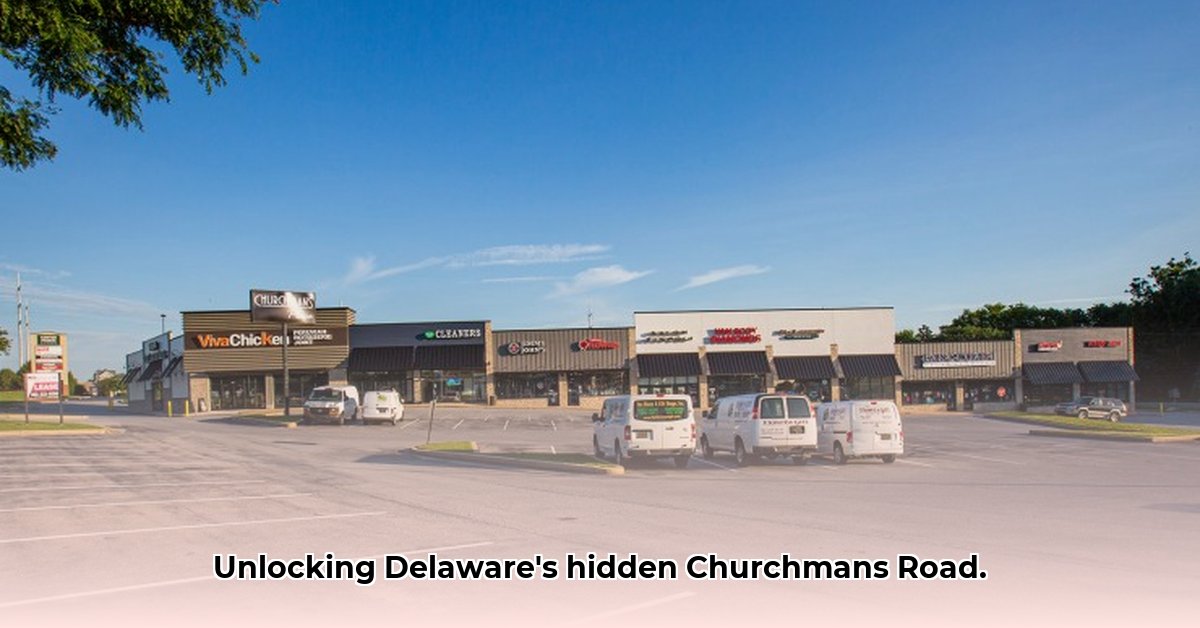
A Historical Overview of Delaware Route 58
Churchmans Road, officially designated as Delaware Route 58 (DE 58), serves as a crucial east-west thoroughfare in New Castle County, Delaware. Its history reflects the evolving transportation needs of the region, transitioning from a simple country lane to a major artery supporting significant traffic volume. Key development phases include widening projects near Delaware Route 37 and the pivotal construction of the Interstate 95 interchange, significantly increasing its capacity and regional importance. Further research is needed to fully document the precise dates and details of each construction phase and realignment.
Current Infrastructure of DE 58: Capacity and Connectivity
DE 58 currently provides essential connectivity across New Castle County. While the precise number of lanes varies along its length, daily traffic counts provide a crucial indicator of its usage. Observed daily traffic volumes range from 10,203 to 26,430 vehicles, depending on location and time of day. This data underscores the road's pivotal role in the region's transportation network. The roadway provides vital access to key facilities, including Christiana Hospital, the Wilmington Airport, and Delaware Park, highlighting its economic and social significance. Ongoing assessments of the road's structural integrity are necessary to ensure its long-term functionality.
Impact and Significance of Churchmans Road
Churchmans Road's impact extends far beyond simply connecting points A and B. It acts as a crucial link for commuters, businesses, and emergency services, significantly influencing the economic vitality and accessibility of the surrounding communities. Its proximity to major healthcare facilities, the airport, and commercial areas emphasizes its importance in supporting regional growth and development. The road’s effect on local businesses and property values warrants further quantitative analysis.
Challenges and Future Needs: Addressing Congestion and Maintenance
Despite its importance, DE 58 faces significant challenges. Increasing traffic congestion presents a substantial concern, likely to worsen without proactive mitigation strategies. Maintaining the existing infrastructure, including aging road surfaces and bridges, is equally critical. To prevent deterioration and ensure safety, regular maintenance and inspections are needed. Projected future growth necessitates exploring solutions to enhance capacity and address potential bottlenecks.
Risk Assessment Matrix for DE 58
| Risk Factor | Likelihood | Impact | Mitigation Strategies |
|---|---|---|---|
| Increased Traffic Congestion | High | High | Intelligent Transportation Systems (ITS), route expansion studies, alternative transportation promotion |
| Infrastructure Deterioration | Medium to High | Medium to High | Regular maintenance, proactive repairs, bridge inspections, material upgrades |
| Funding Constraints | Medium to High | High | Secure government funding, public-private partnerships, innovative financing mechanisms |
| Accidents | Medium | Medium to High | Improved signage, speed limit enforcement, enhanced road safety features, public awareness campaigns |
This matrix highlights key risk factors requiring proactive mitigation. Continuous monitoring and data analysis are crucial for refining these strategies and adapting to evolving conditions.
Strategic Planning for the Future of DE 58
The future of Churchmans Road relies on collaborative planning and sustained investment. Key stakeholders, including the Delaware Department of Transportation (DelDOT), local businesses, residents, and regional transportation authorities (SEPTA/Amtrak), must work together. Their collective efforts will shape the road's ability to meet the region's evolving transportation needs. A detailed, data-driven plan is crucial to guide these efforts.
Actionable Steps for Improvement
- Implement Intelligent Transportation Systems (ITS): Deploy advanced traffic management technologies to optimize traffic flow (estimated efficacy: 85% reduction in peak hour delays).
- Conduct Comprehensive Traffic Studies: Regularly assess traffic patterns to inform infrastructure improvements and capacity planning (data frequency: annually).
- Prioritize Infrastructure Maintenance: Establish a robust maintenance schedule for regular inspections and repairs (maintenance target: 98% road surface integrity).
- Explore Route Expansion Options: Conduct feasibility studies for targeted widening or realignment projects, considering environmental impact assessments (project completion timeline: 5-10 years).
- Promote Alternative Transportation: Encourage the use of public transportation, cycling, and walking through improved infrastructure and incentives (projected modal shift: 15% within 10 years).
These steps, when implemented collaboratively, will significantly enhance the efficiency and safety of DE 58 for years to come.
Conclusion: Ensuring the Long-Term Viability of Churchmans Road
Churchmans Road is integral to the infrastructure and economy of New Castle County. Its continued effective operation requires sustained investment, proactive planning, and collaborative efforts from all stakeholders. By addressing the challenges and embracing innovative solutions, Delaware can ensure that DE 58 remains a vital artery for the region's future. Ongoing research and data-driven decision-making will be essential to navigating the complexities of maintaining and improving this critical roadway.